What type of food is served at a braai?
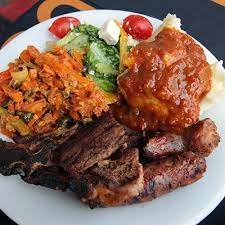
A typical braai plate consist of pap, a salad and a variety of well marinated meat.
But, what kind of meat?

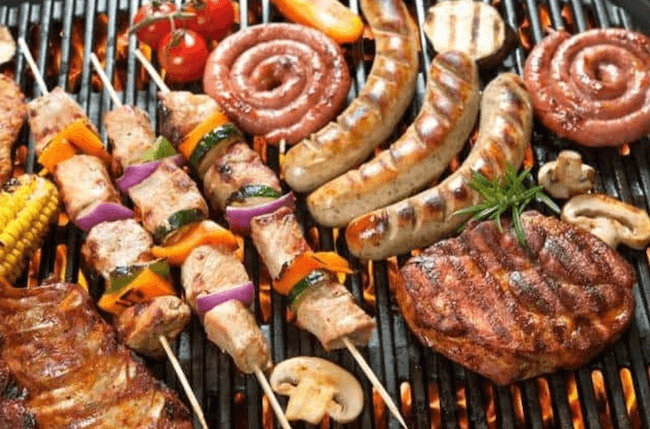
The word ‘braai’ is a South African favourite term for our beloved tradition of cooking meat over an open flame,
and while there is no argument as to where the word came from, the when is another matter.
The word ‘braai’ originated from the Dutch word ‘braden’ meaning ‘roast’ and has since become the word for the social gathering, the grill,
and the action of cooking the meat.
It is a word which brings South Africans together across all languages and inspires pride as we gather.
During apartheid, the braai became a symbol of unity and resistance. Non-white communities were often denied access to public parks and beaches,
leading them to create their own gathering spots for braais in their backyards and townships. The braai became a source of comfort, cultural preservation,
and community building during this challenging period.
In 1995, South Africa underwent a historic transformation when Nelson Mandela was elected as the country's first black president.
To commemorate this event and celebrate
the nation's diverse cultural heritage, National Heritage Day was established.
It was on this day that the 24th of September officially
became known as "National Braai Day."
Today, National Braai Day is a celebration of South Africa's multiculturalism, bringing people from all walks of life together
to share a meal cooked over an open flame.
It has also spread beyond South Africa's borders, with people around the world joining in the festivities.
A typical braai plate consist of pap, a salad and a variety of well marinated meat.
But, what kind of meat?
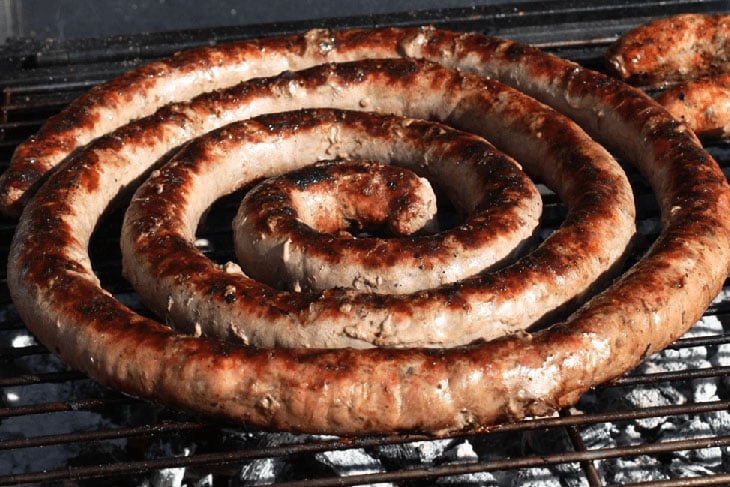
Boerewors is a type of sausage which originated in South Africa.
Boerewors is made from coarsely minced beef (sometimes combined with minced pork, lamb, or both) and spices.
To braai boerewors, you cook on low heat for approximately 20 minutes, 10 minutes per side.
Turn with tongs and do not pierce with fork during cooking as this releases much of the moisture in the sausage.
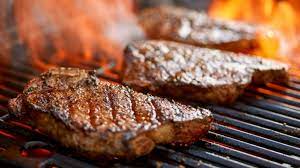
A steak is a thick cut of meat generally sliced across the muscle fibers, sometimes including a bone.
To prepare a perfect steak, you have to make sure that it is a room temperperature.
You need very hot coals and that your steak is
well marinated. The steak should preferably be done medium rare,
so you should braai each piece for about 7 minutes, 2 minutes on each side then 1.5 minutes on each side again.
Avoid using a fork as this will result in your steak losing juices and making your steak dry.
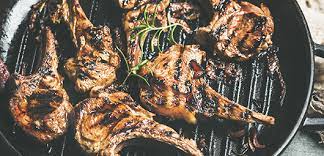
The lamb loin chop is that animal’s royal and most expensive cut of braai meat.
It is exactly like a T-bone steak, but just from a lamb rather than a cow.
With lamb chops, you need to keep the flavours simple so as to complement and
not overpower the natural flavours
of the meat. Season the chops and skewers with salt, pepper and coriander.
Chop or crush the garlic, chop the corianderleaves and add to the
chops and skewers.
Drizzle with lemon juice and let the meat marinatefor as long as it takes
your fire to burn out and form coals.
Braai the chops and skewers over hot coals for 8 to
12 minutes until they reachthat point between medium rare and
medium where lamb tastes best.
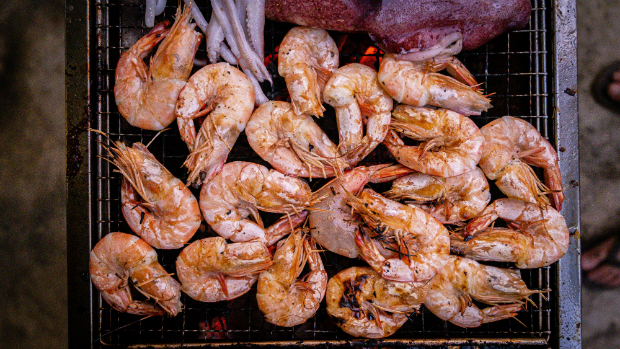
The most popular seafood served are praws and hake fish.
You can braai a whole fish ‘open’ or ‘closed’ and the choice is really a matter of personal preference.
An ‘open’ fish has two sides, a flesh side and a skin side. Rub or paint the oil onto both sides and
then grind salt and pepper onto the flesh side only.Place it on medium-to-hot coals,
flesh side down,
for about 3–4 minutes until the flesh gets a light golden colour.
The fish is ready when it has turned white,
comes away from the bones when you try
to loosen it or flakes when you insert a fork into it.
Braaied prawns are very popular. The fire makes the shells nice and crisp while giving
the meat a caramelised and smoky favour.
When braaing prawns it’s not important
that they be shelled but they do have to be deveined.
The shells give flavour and keep them from drying out.
Drizzle the prawns with the marinade and toss, ensuring all the prawns are coated with sauce. Chucking the prawns and marinade
into a plastic bagand sealing it
is also an easy way to do it. Let them marinate for 30 minutes to 1 hour.
To give the prawns direct exposure to the coals, braai them in a pan with holes in
the bottom, a braai basket or on skewers.
The prawns are ready after about 6 minutes
on medium to hot coals;
you will see they are done when the shells change colour
from white to pink and the flesh from glassy to opaque.